Black Dove Holidays · Oman

Muscat

Where ancient Arabia meets the modern world

A city shaped by five centuries of trade, seafaring and exchange — where Portuguese forts overlook Omani souqs, where frankincense still scents the air and where the pace of life remains, deliberately and beautifully, its own.

INTRODUCTION

Arabia as it has always been — before the world discovered it.

There is a version of the Arabian Gulf that existed long before the towers and the tourist infrastructure, before the supercars and the spectacle. Muscat is that version — still intact, still inhabited, still entirely itself. The capital of Oman sits between the Hajar Mountains and the Arabian Sea in a series of bays and inlets that have sheltered traders, navigators and explorers for two thousand years. It does not compete with its neighbours. It has never needed to.

Muscat is not Arabia performing for visitors. It is Arabia — with all its depth, its grace and its remarkable capacity to make the world feel quieter and more considered than it was before you arrived.

The city's character is shaped by everyone who has passed through it: Omani sailors who navigated as far as China, Portuguese commanders who built their forts above the harbour, Indian merchants who settled its trading quarters, East African communities whose presence shaped its music and its food. All of them left something here. All of it is still visible, if you know where to look — and if you travel with someone who does.

The Gulf you may have seen

Record-breaking towers

Manufactured spectacle

Indoor ski slopes and megamalls

International chain hotels

A city built in a generation

Muscat

A skyline kept deliberately low

Authenticity, unhurried

Souqs, forts and frankincense

Architecture rooted in Omani tradition

A city built across two millennia

INTRODUCTION
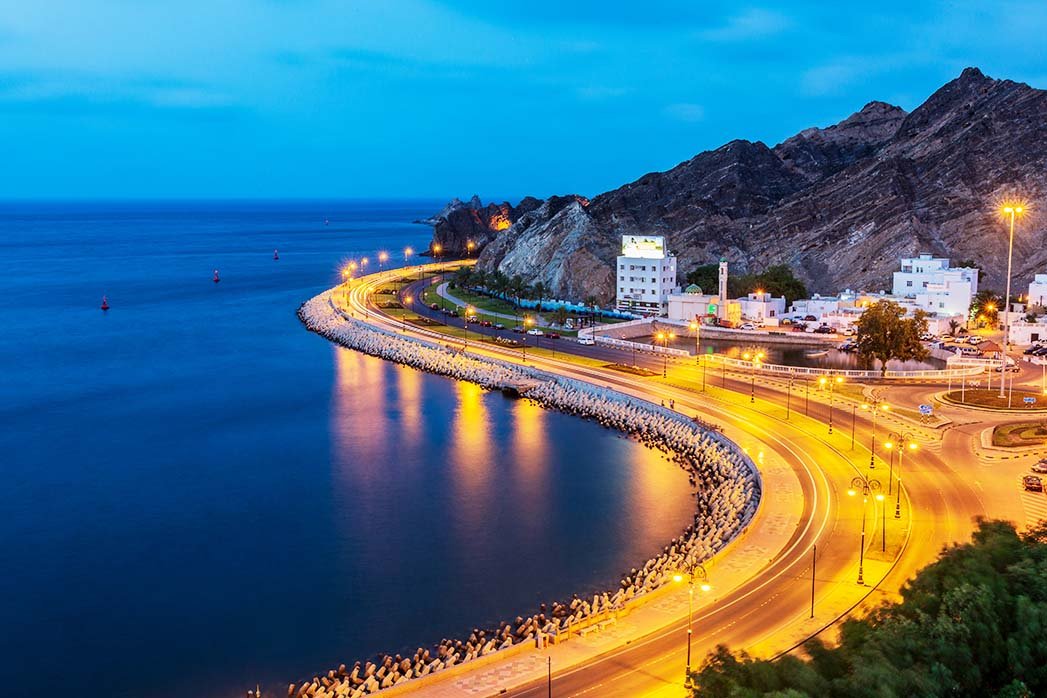
Oman_Muscat_MuttrahCorniche Muttrah Corniche · Old Muscat
01

The old harbour and the Corniche

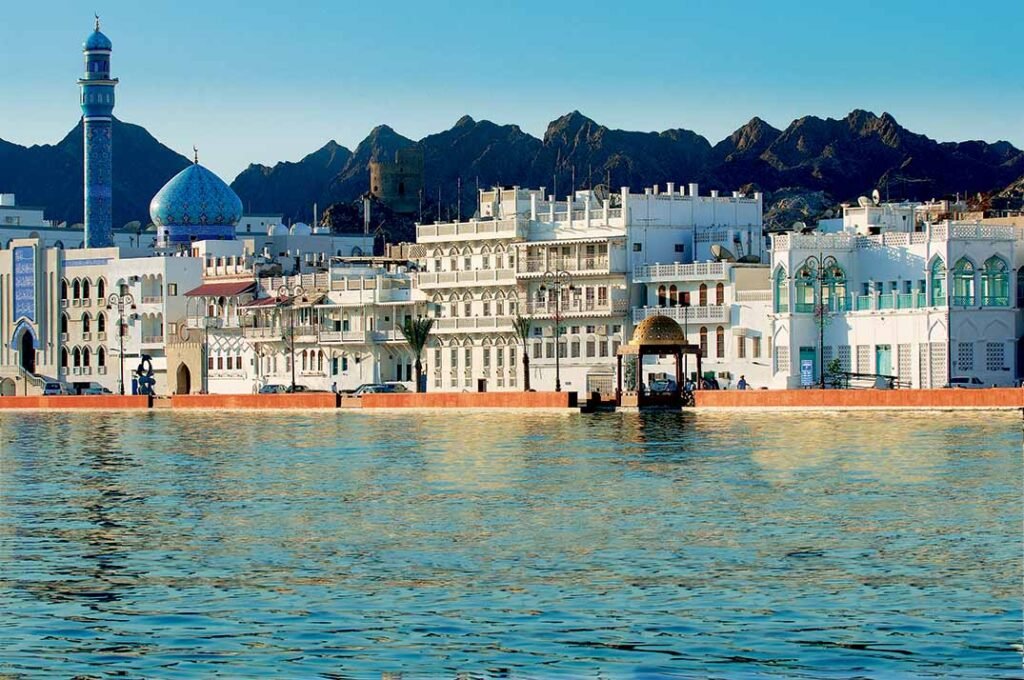
Muttrah is where Muscat's soul lives. The ancient harbour — where Omani dhows once departed for Zanzibar, Calicut and Guangzhou — still fringes a Corniche that has changed remarkably little in character, despite everything around it. The Muttrah Souq behind it is one of the finest in Arabia: labyrinthine, fragrant with frankincense and rose water, its stalls selling silver khanjar daggers, Omani textiles and spices that have travelled these same routes for centuries. Walk it slowly, early in the morning, before the day fully begins.
Classic Oman Cover
02

A city that absorbed the world

Few cities in the world carry the imprint of so many different civilisations in so small a space. Portuguese forts — Al Jalali and Al Mirani — still command the harbour entrance, built in the sixteenth century and barely altered since. The quarter of Muttrah carries the commercial DNA of Indian trading families who settled here generations ago. East African rhythms appear in Muscat's music. Persian influences run through its architecture and its courtly traditions. This is not a history lesson. It is a texture — present in every alley, every doorway, every courtyard you enter.
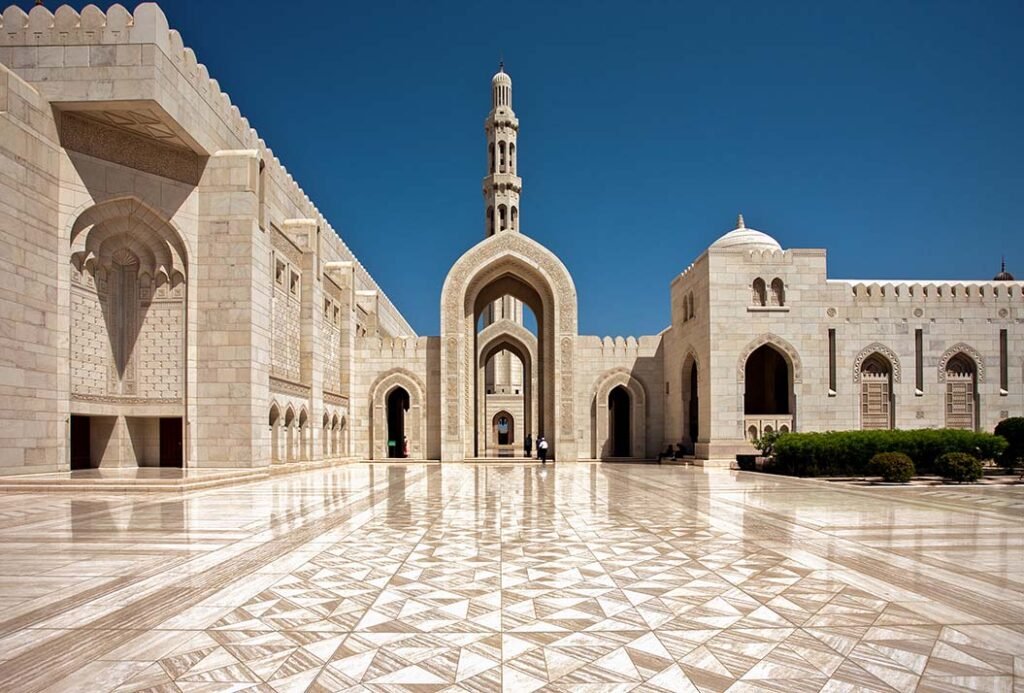
Grand Mosque Oman Sultan Qaboos Grand Mosque
03

Architecture of extraordinary beauty

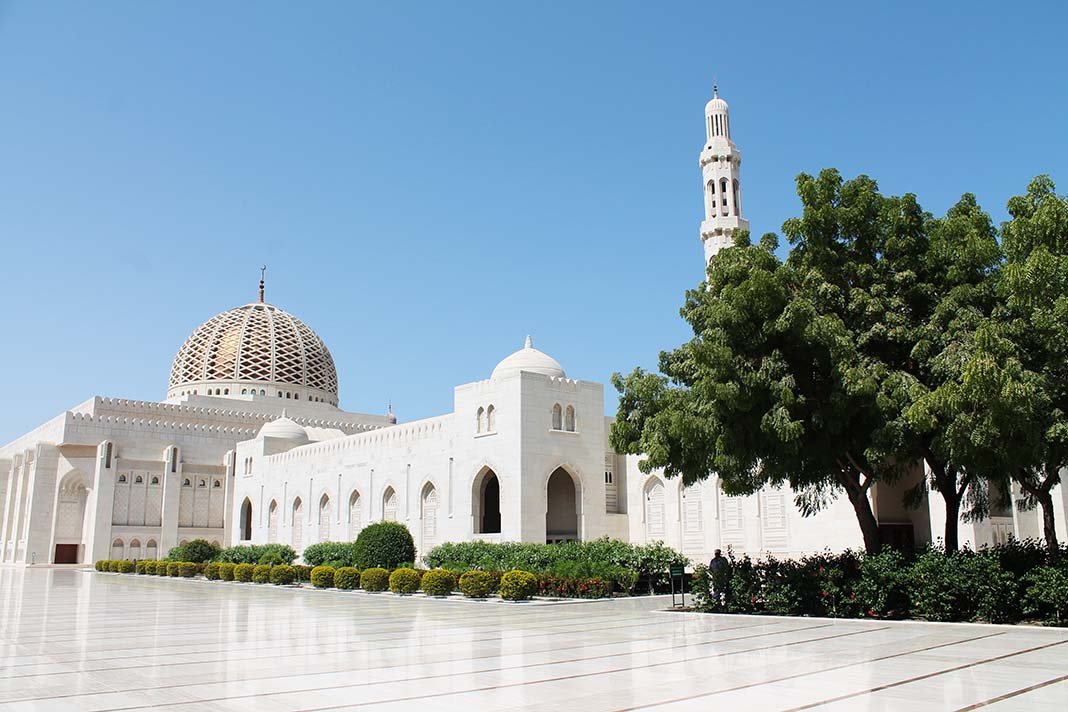
The Sultan Qaboos Grand Mosque is one of the finest pieces of religious architecture built anywhere in the world in the last century — its prayer hall housing a hand-woven Persian carpet of almost incomprehensible scale and craft, its exterior a study in the finest Omani stone work. But the architecture of Muscat is not confined to the grand. It is present in the whitewashed geometry of its old neighbourhoods, in the carved wooden doors of traditional houses, in the carved plasterwork above doorways that might easily be mistaken for lace. Muscat is a city to look at closely.

Oman_Muscat_MuttrahCorniche
04

The sea, the mountains and the desert beyond

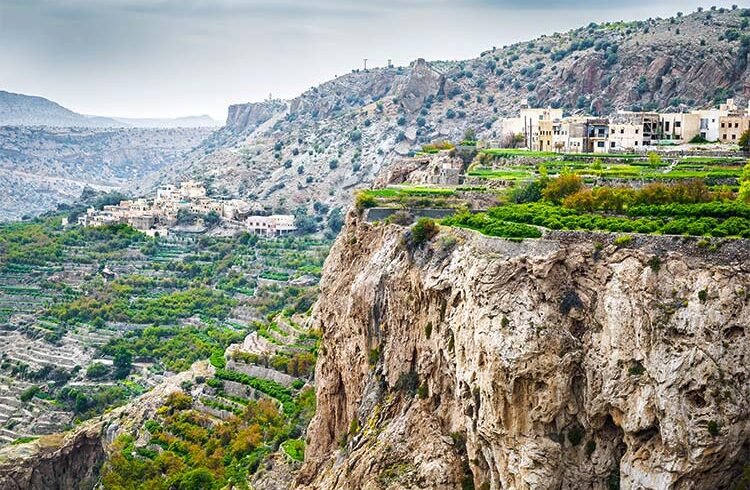
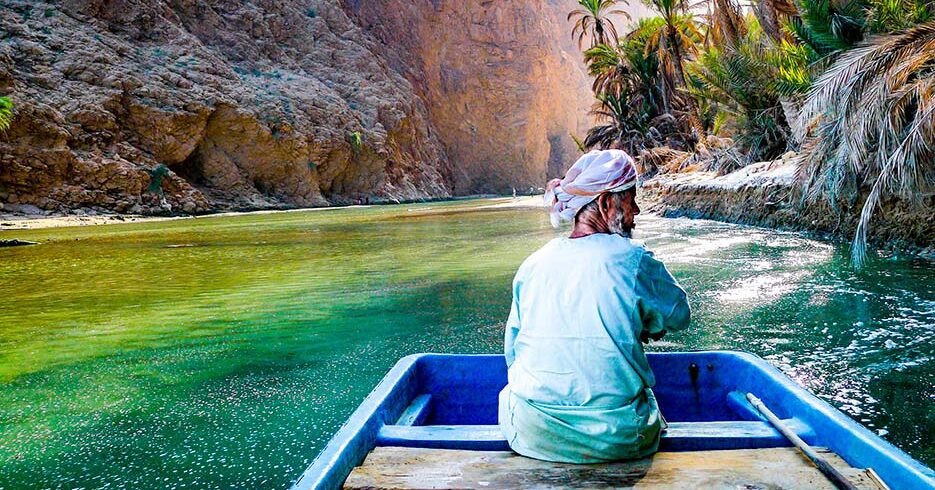
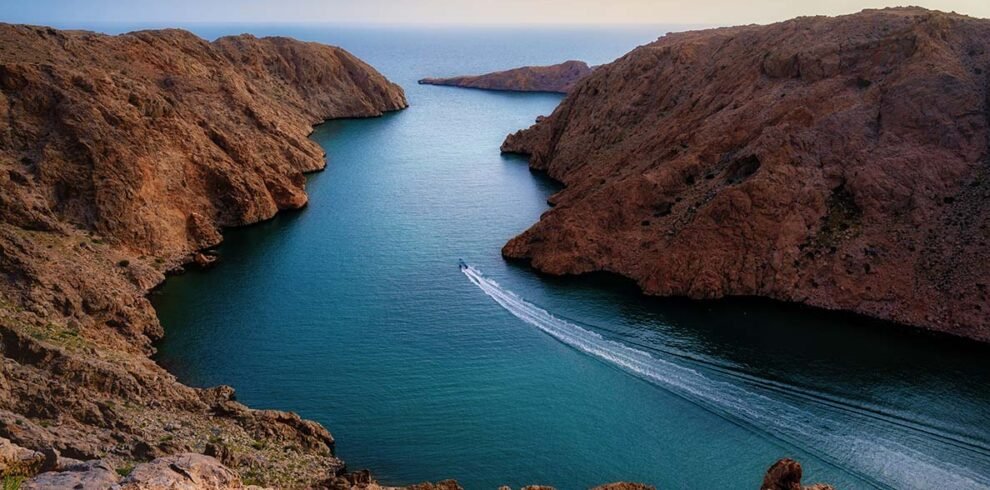
Muscat sits at a remarkable geographical intersection. The Arabian Sea defines its western edge — still fished by traditional methods, still navigated by wooden dhows at dawn. The Hajar Mountains rise directly behind the city, dramatic and ancient, threaded with wadis where freshwater pools appear at the base of sheer cliffs. An hour's drive in any direction reveals a landscape of extraordinary contrast: the Wahiba Sands to the south, the fjord-like inlets of the Musandam to the north, the rose-water gardens of the interior. Muscat is the finest possible starting point for the rest of Oman.
THE CROSSROADS

Two thousand years of exchange

Muscat's character as a cultural crossroads is not a recent designation. It is a consequence of geography, courage and two millennia of extraordinary maritime history.
Ancient

The Frankincense Road

Oman's frankincense — the finest in the world — left through Muscat's harbour, bound for Rome, Mesopotamia and beyond.

Medieval

Omani seafarers

Omani navigators reached China, East Africa and the Malabar Coast centuries before European discovery. The dhow was their instrument.

16th century

Portuguese occupation

Portugal held Muscat for 140 years, building the twin forts that still guard the harbour. Their legacy is written in stone above the sea.

Modern era

The Omani Renaissance

Sultan Qaboos transformed Oman from 1970 — preserving its heritage while opening it to the world. His architecture endures throughout Muscat.

BLACK DOVE EXCLUSIVES

Signature Muscat experiences

These are the encounters that reveal Muscat properly — unhurried, private and guided by people who carry the city's history in their own families.

Dawn at Muttrah Souq

Before the heat, before the crowds — the souq at its most itself. Frankincense rising in the early air, merchants preparing their stalls, the harbour just visible through the archways. A private walk with a guide whose family has traded here for generations.

Private Grand Mosque visit

The Sultan Qaboos Grand Mosque, visited with an expert guide who can explain its architectural language, its Persian carpet and the tradition of Islamic craftsmanship that produced it. A genuinely moving experience, handled with the respect it deserves.

Omani craft and culture encounters

Silver smithing, khanjar craftsmanship, frankincense harvesting, traditional Omani weaving — encounters with artisans who are both masters and guardians of a tradition that Oman has protected with unusual care. Not a demonstration. A conversation.

Wadi journey into the Hajar

A private 4x4 excursion into the mountains behind Muscat — through ancient wadis, past villages where falconry is still practised and where the silence is the kind that cities have entirely forgotten. Swimming in a natural wadi pool at the end of a canyon. Nothing performed, nothing staged.

Traditional dhow at sunset

A private sunset on the water aboard a traditional wooden dhow — the same vessel design that carried Omani sailors to Zanzibar and Calicut centuries ago. The forts of Old Muscat passing on one side, the mountains on the other, the sea entirely calm.

Omani hospitality dining

A private dinner in a traditional Omani home or historic majlis — shuwa-slow-roasted meat, the rice dishes of the Omani interior, the sweets that carry Persian, Indian and East African influences — hosted with a generosity that is entirely genuine and entirely unforgettable.

DESTINATIONS

Muscat and beyond

Muscat is the starting point. From here, Oman opens in every direction.
01

Old Muscat

Forts, harbour, history.

02

Muttrah

The ancient trading quarter.

03

Nizwa

The fortified heart of Oman.

04

Hajar & Wadis

Mountains, canyons, pools.

05

Wahiba Sands

The great Omani desert.

The Black Dove approach
Muscat reveals itself slowly, to those who do not rush it. We design journeys that honour that quality — private, unhurried, guided by people who carry the city's story in their own lives.

Most visitors spend two nights in Muscat before moving on. We encourage three days minimum, and we will fill every one of them with encounters that most itineraries never reach. Muscat rewards the traveller who stays a little longer, looks a little closer and asks the guide to take them somewhere that is not on the standard route.

PLANNING

When to visit Muscat

Oman's climate is one of the most straightforward in the region to plan around — a long, excellent window for travel and a summer that only the genuinely heat-tolerant should consider.
October – April
Ideal season

The finest window by some distance. Warm days, cool evenings, clear skies and comfortable conditions for outdoor exploration — wadis, souqs and desert alike. October and March offer particularly pleasant temperatures for walking and wildlife.

November – February
Peak season

The coolest months, with temperatures averaging 22–28°C. The most popular travel window — book well ahead for the finest properties and private guides. An excellent time for desert excursions to the Wahiba Sands.

May – June
Shoulder

Temperatures rising but not yet extreme. Fewer visitors, excellent rates. The Khareef (monsoon) has not yet reached Muscat — though it arrives in Salalah in the far south, making this an interesting time for a combined itinerary.

July – September
Summer

Temperatures regularly exceed 40°C. Outdoor exploration is limited to very early morning. Not recommended for most travellers — though some guests with specific interests (the Khareef season in Salalah, for instance) travel at this time with adjusted expectations.

QUESTIONS

Frequently asked

How many days should I spend in Muscat?

We recommend three to four days in Muscat itself — enough to explore Old Muscat, Muttrah, the Grand Mosque and at least one wadi excursion into the Hajar Mountains. Most visitors wish they had stayed longer. Four days in Muscat followed by time in Nizwa, the Wahiba Sands and the coast makes for an exceptionally well-rounded Oman journey of eight to ten days.

Is Muscat safe for independent travellers?

Oman is consistently ranked among the safest countries in the world for international visitors. Muscat is a relaxed, welcoming city with a long tradition of hospitality to foreign travellers. Solo travellers, couples and families are all equally comfortable here. That said, a private guide transforms the experience — not for safety, but for depth of access and understanding.

 
Can Muscat be combined with India?

Absolutely — and many of our guests do exactly this. The two destinations complement each other extraordinarily well, and direct flights between Muscat and major Indian cities make the logistics straightforward. Rajasthan followed by Muscat is a particularly satisfying combination: both are steeped in history, both reward the traveller who goes slowly, but they offer completely different cultural registers. We have designed many such journeys and will be happy to discuss what this might look like for your dates and interests.

 
What makes Muscat different from Dubai or Abu Dhabi?

Almost everything, in the ways that matter most to a discerning traveller. Muscat has kept its skyline low by law — no building may exceed the height of the Sultan Qaboos Mosque. It has preserved its old quarters rather than replacing them. It has resisted the kind of mass tourism development that characterises its neighbours. The result is a Gulf city with genuine historical texture, a living souq culture, extraordinary architecture and a pace of life that feels, against all odds, entirely unhurried. That is increasingly rare anywhere in the world.

 
EXPLORE FURTHER

Muscat is the beginning.
Oman is the rest.

Beyond Muscat, Oman opens into one of the world's great travel landscapes — a country that has remained almost entirely itself while the rest of the Gulf transformed around it.
Oman interior

Nizwa and the ancient forts

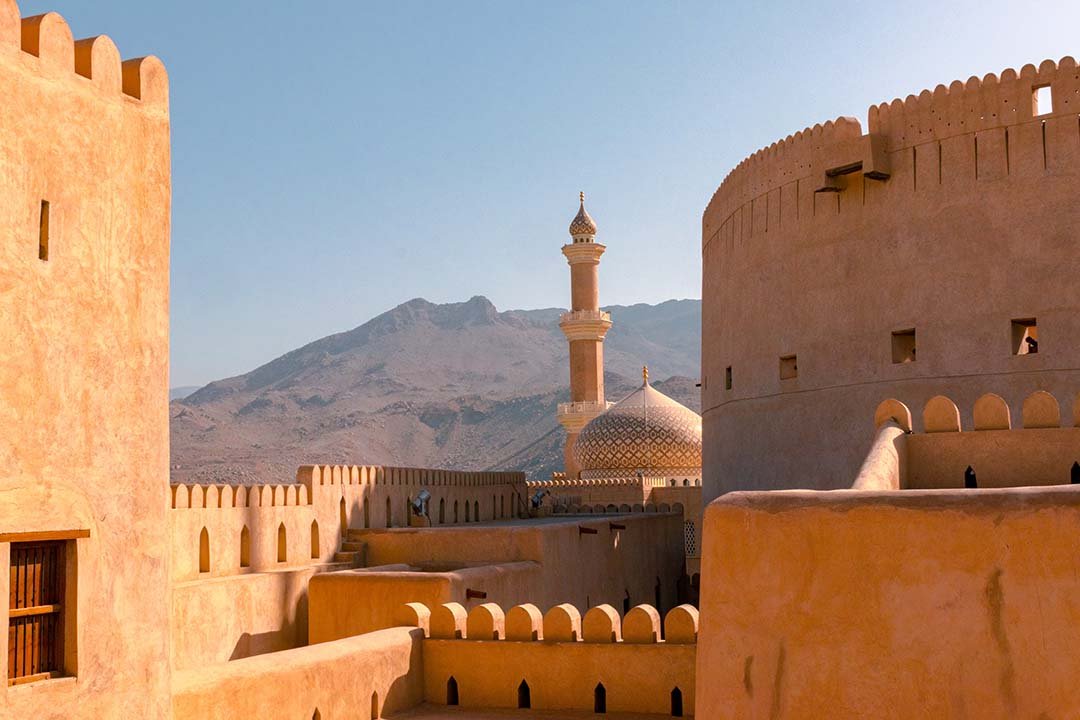
The fortified old capital of Oman, its souq famous for silverware and khanjar daggers, its fort among the most impressive in Arabia. An essential counterpoint to coastal Muscat.

Oman desert

The Wahiba Sands

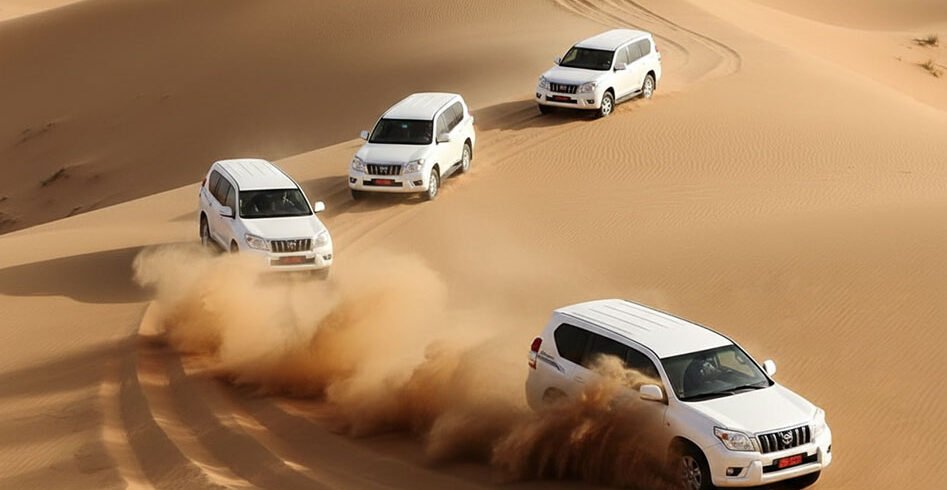
One of the Arabian Peninsula's most dramatic desert landscapes — a sea of dunes stretching south from the mountains. Luxury tented camps, camel treks at dusk, a sky full of stars. The desert at its most itself.

We will be redesigning our full Oman page shortly. In the meantime, speak to us about any Oman journey — we know the country in depth and design itineraries across all of it.

Begin your journey

Your Muscat awaits.

Ancient Arabia. Entirely private.

Tell us when you would like to travel, what draws you to Arabia and how much time you have — and we will design a journey through Muscat and Oman that gives you the depth this country rewards.

Scroll to Top