
Wahiba Sands
Private desert journeys beneath endless skies — in one of the last places where the world genuinely feels far away.
A desert that gives you back something the modern world has taken.
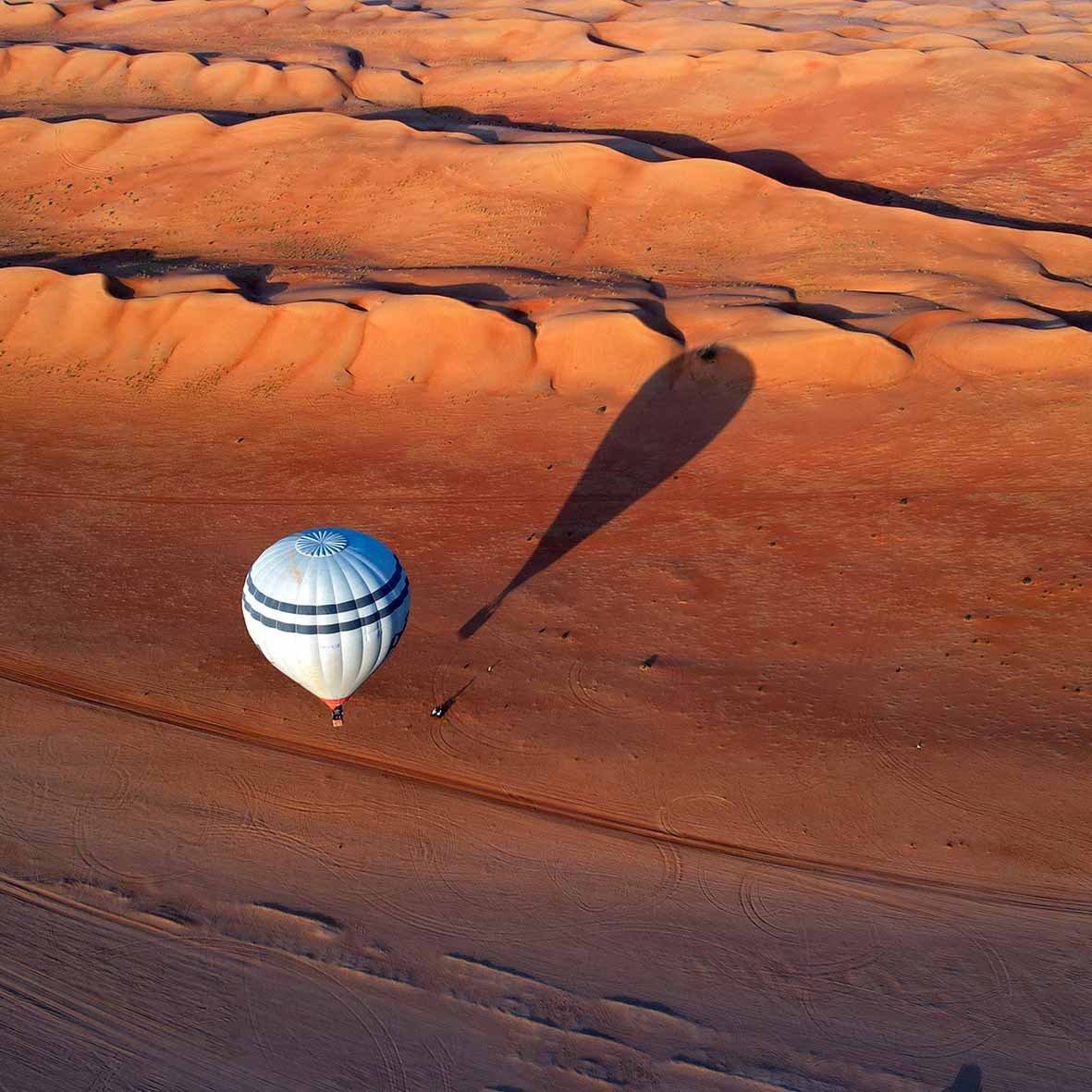
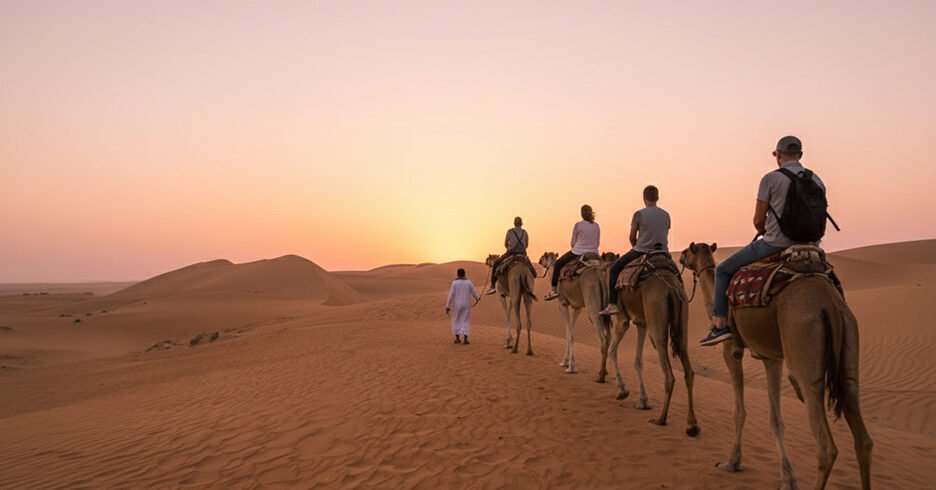
The Wahiba Sands — known in Arabic as Ramlat al Wahiba — stretch south from the Hajar foothills across 12,000 square kilometres of sand that rises and shifts with a patience that makes human concerns feel temporary. The dunes here reach 100 metres in places. The colours change from ochre at midday to deep amber at dusk to a cool blue-grey before dawn. And at night, with no city within hours and no artificial light in any direction, the sky reveals itself in a way that most people alive today have never seen.
The desert is not empty. It has never been empty. It is simply full of things that require stillness to notice — and that is precisely what it asks of the traveller who arrives here.
The Bedouin communities who have lived in these sands for generations know this. The dunes are not a landscape to them — they are a home, a map, a source of food and water and shelter, readable in ways that no GPS can replicate. A journey into the Wahiba that includes time with these communities offers something that no quantity of dune driving can: a genuine encounter with a way of life that has answered the desert on its own terms for centuries.
Three things the desert gives you that nowhere else can
The real kind — not the absence of noise, but the presence of space
The desert has been home for generations
Stars visible nowhere else in Oman
Bortle scale darkness
Stars visible to the naked eye
Night temperature in winter
What the desert offers
None of these are activities. They are encounters with the desert's own pace — and that is the distinction that matters.
Sunset from a private dune
Not watched from a camp deck or a vehicle roof. Climbed to — on foot, in the late afternoon heat, the guide finding the ridge with the best angle on the light. Then fifteen minutes of watching the desert change colour in a sequence that no photograph has yet managed to preserve. Then the walk back down in the dark, the camp lights appearing below like something anchored in the sand.
A night under open sky
The best camps offer the option of sleeping outside — a mattress on the sand, a lantern at reach, nothing overhead but the sky. Most guests who try this once describe it as one of the most memorable nights of their adult lives. The stars arrive gradually as the sky darkens, and by midnight the sky is so full of light that sleep feels like a waste of it.
Bedouin hospitality
Coffee brewed over a small fire in a tent on a dune ridge. Dates offered without being asked for. Conversation that moves at the pace of the afternoon and expects nothing of you except presence. A genuine encounter with a Bedouin family — arranged through our local relationships rather than a tourism programme — is the experience of the Wahiba that most guests describe last and remember longest.
Stargazing
The best camps provide a simple star map and a guide who can point out the constellations, the planets and the satellite trails that cross the sky at regular intervals. But the most honest stargazing in the Wahiba requires no equipment at all — simply lying on your back in the sand and waiting for your eyes to adjust to what has always been there.
Sunrise in the desert
The desert at dawn is a different place from the desert at any other hour. The air is cool and completely still. The dunes cast long shadows in the low light. Colours appear that the midday sun obscures — lavender and rose and a particular shade of orange that seems to come from inside the sand rather than from the sky above it. Worth the early alarm. Worth it every time.
Gentle dune driving
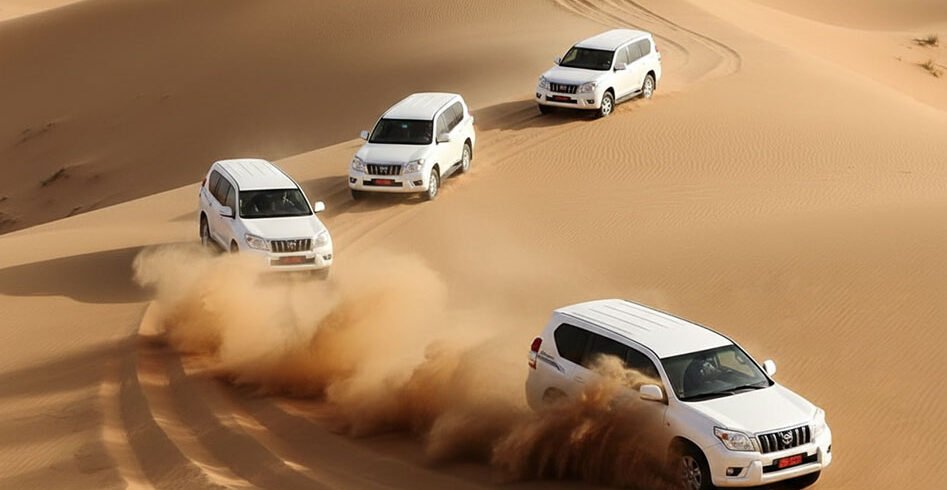
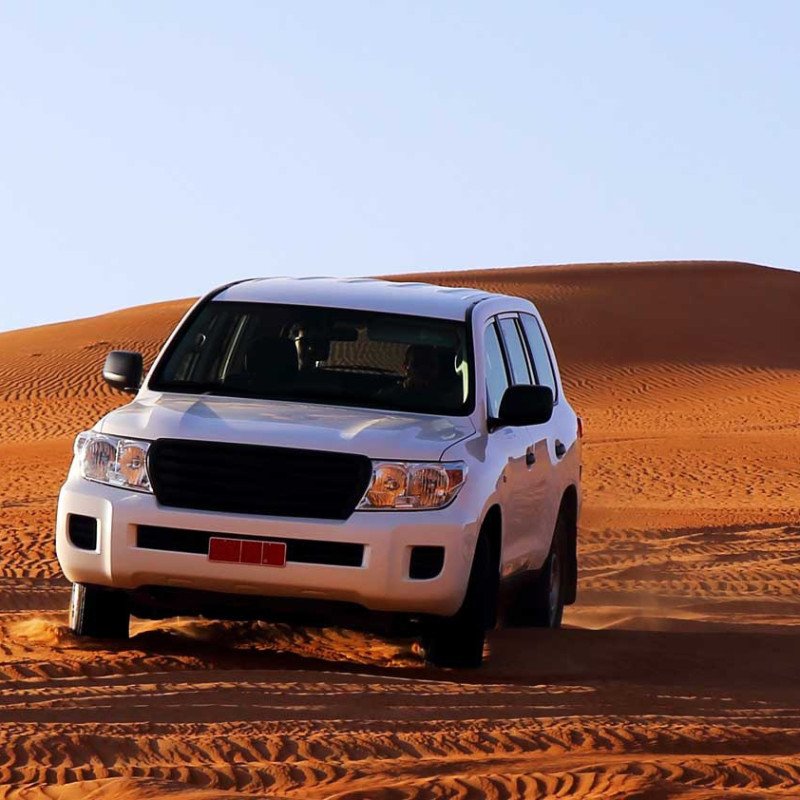
The Wahiba is not a theme park, and we do not approach it like one. Dune driving here means moving through the landscape — crossing from one camp to another, finding vantage points, traversing the terrain that the Bani Wahiba cross on foot and by camel. Private, unhurried, guided by someone who knows the sand beneath the wheels. Not adrenaline. Discovery.
Desert camps — because the accommodation is the experience
Luxury Desert Camps
• Air conditioning & heating
• Private dining area
• Dune ridge positioning
Boutique Desert Camps
• Intimate scale (under 15 tents)
• Owner-managed character
• Strong Bedouin connection
Authentic Bedouin Camps
• Bedouin-hosted
• Shared facilities
• Unmediated desert experience
We will recommend the right camp for your travel style and what you are hoping to feel — not simply the most expensive or most-reviewed option.
The rhythm of the Wahiba
-
05:30
Dawn in the desert
The air cool, the light beginning at the horizon. Climb the dune behind camp on foot — the sand still firm from the cold night. Watch the colours arrive in a sequence that cannot be predicted and cannot be hurried.
-
07:30
Breakfast at camp
Omani flatbread, eggs, fresh dates, strong cardamom coffee. Eaten outside while the morning light is still kind enough to sit in. No particular schedule for the rest of the day. This, at first, takes some adjustment.
-
10:00
Into the dunes
A private 4WD excursion through the landscape — not a race, not a theme-park circuit. Moving through the sand at the pace of curiosity, stopping where the view is worth stopping for. Visiting a Bedouin family if arranged. Reading, if not.
-
13:00
The long afternoon
The desert is not comfortable at midday and makes no apologies for this. The camp's shade and the tent's cool are the correct response. Rest, read, sleep. The desert has been here for millennia. It is patient with those who need to slow down before they can be still.
-
16:30
Sunset on the ridge
Walk to the dune ridge as the light begins to change. The sand turns amber, then deep gold, then a burnt sienna that has no exact name in any language. The shadow of each dune ridge extends across the valley below. Stay until it is dark enough to need a torch on the walk back.
-
20:00
Dinner under the sky
Tables set outside — the stars already arriving overhead. Omani slow-cooked meat, rice, salad, the smell of oud burning somewhere in the camp. Conversation that finds its own pace without the usual interruptions. The temperature dropping. The sky growing denser.
-
22:00
The stars
The camp lanterns go out one by one. The Milky Way emerges as something structural — not a smear but an architecture. Lie on your back in the sand and look up. This is why you came. This is the thing you could not have anticipated from a description, however accurate.
Pairing Wahiba Sands with the wider Oman
The Wahiba sits perfectly within a classic Oman interior circuit — a sequence that moves from culture to mountains to desert to coast without a single wasted transition.
-
Muscat
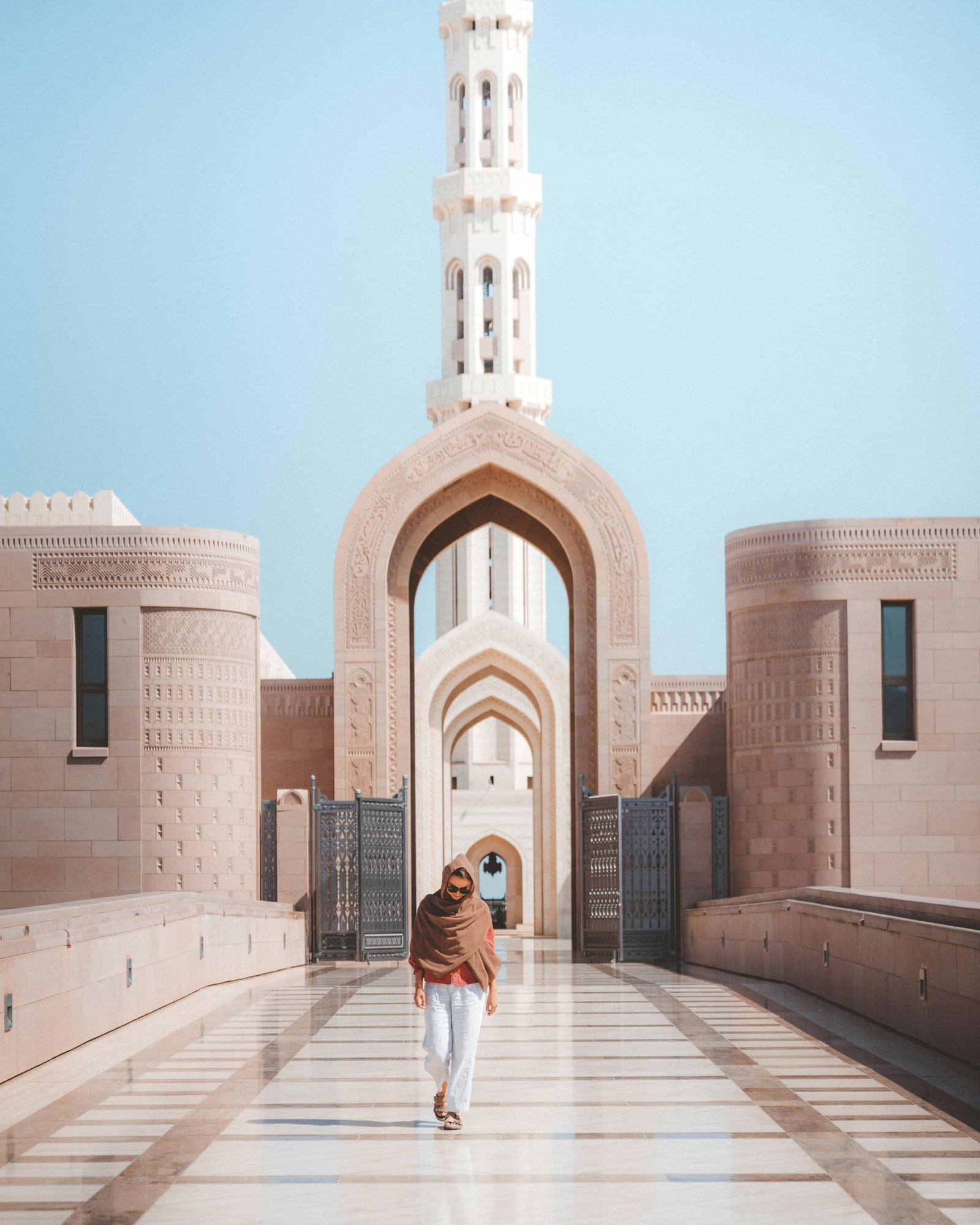
2 – 3 nightsArrive. Old city, Muttrah Souq, Grand Mosque, evening dhow on the harbour.
-
Nizwa
1 – 2 nightsThe cultural heart of Oman. Fort, Friday souq, silver market and the ancient capital.
-
Wahiba Sands
2 nights — the heart of the journeyEnter the desert. Dunes, silence, Bedouin hospitality and the finest sky you have seen.
-
Sur
1 nightOman's dhow-building town. Ras al Jinz — green turtles nesting on an ancient beach.
-
Muscat
ReturnReturn along the Batinah coast. Final dinner. Depart.
Frequently asked
Do I need a 4WD vehicle?
Yes — the Wahiba Sands are not navigable in a standard car. All desert travel requires a 4WD, driven by an experienced guide who knows the terrain. We arrange private vehicles and drivers for all Wahiba itineraries. Guests do not need any off-road driving experience — your guide handles all of that, including the dune crossings.
How many nights should I stay?
Two nights is the minimum for a genuine desert experience — one evening watching sunset from the dunes and two opportunities to see the night sky at its best. One night is possible but leaves almost no time for the rhythm of the desert to settle over you, which is the main reason for being there. We recommend two nights as a firm minimum, and three for those who can manage it.
Is the Wahiba Sands suitable for children?
Yes — the desert is one of the most memorable experiences available to children of almost any age, and Omani camps are very welcoming of families. The dune walks, the stars, the Bedouin encounters and the simplicity of desert life tend to produce exactly the kind of travel memory that stays with a child indefinitely. We adjust the pace, the camp category and the activities to suit families travelling with younger guests.
What should I pack for the desert?
Lightweight, breathable clothing for the day and a warm layer for evenings and early mornings — the temperature drops significantly after sunset, especially in winter. Good walking shoes for dune climbing. Sun protection. A camera with a wide lens if you want to attempt the night sky. Almost everything else is provided by the camp. The single most important thing to leave behind is any sense of urgency — the desert has no use for it.
When is the best time to visit?
October through April is the ideal window — comfortable daytime temperatures, cool nights and clear skies for stargazing. November to February is the finest for night sky clarity and the most comfortable sleeping temperatures. Summer (May–September) brings extreme heat that limits outdoor time significantly and is not generally recommended.
Desert journeys
Spend a night beneath
Oman's endless sky.
Tell us when you would like to travel, how long you have and what kind of camp suits you best — and we will design a desert journey that gives you the silence and the sky in the right measure.